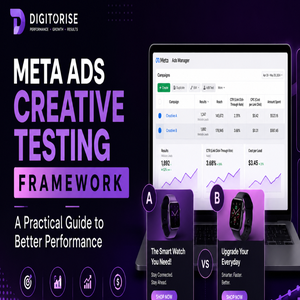
Meta Ads creative testing framework is one of the most practical ways to improve results without relying on guesswork. If your ads are getting impressions but not enough clicks, leads, or purchases, the issue is often not just targeting — it’s the creative itself. This guide explains how to build a simple, repeatable testing system that helps you find winning ad creatives faster and scale them with more confidence.
Running Meta ads without a testing system is a lot like launching campaigns with your eyes half closed. You may get lucky once or twice, but it is hard to build consistent performance that way. A strong meta ads creative testing framework helps you identify which messages, visuals, offers, and formats actually get attention and drive conversions.
This matters because Meta users scroll fast. If your ad does not stop the thumb in the first second or two, your budget disappears before you get useful data. In this blog, you’ll learn how to structure creative testing, what to test first, how to read results, and how to turn good ads into repeatable growth.
Why creative testing matters
Most advertisers spend too much time adjusting audiences and budgets while ignoring the real performance lever: the ad creative. In many accounts, better creative improves CTR more than a new audience ever could. That is why creative optimization ads should be part of every paid media strategy.
Creative testing helps you:
- Improve CTR.
- Increase engagement rate.
- Reduce ad fatigue.
- Lower cost per result.
- Find scalable messaging faster.
If the same ad is shown again and again, people stop noticing it. That is ad fatigue. When that happens, even a previously strong campaign can start losing momentum. A structured meta ads creative testing framework helps you stay ahead of that decline by refreshing ads before performance drops too far.
What to test first
A good testing system starts with the variables that matter most. Do not change everything at once. If you test too many things together, you will not know what actually improved performance.
Test the hook first
The hook is the first line, first frame, or first few seconds of the creative. It is the make-or-break moment. A weak hook means the rest of your message may never get seen.
Good hook ideas include:
- A direct problem statement.
- A bold result or promise.
- A curiosity-based statement.
- A social proof angle.
- A “mistake” or “avoid this” angle.
Test the format
Different audiences respond to different formats. This is where facebook ads creative testing becomes very useful. One audience may prefer static images, while another reacts better to video or carousel ads.
Test formats such as:
- Static image ads.
- Short-form video ads.
- Carousel ads.
- UGC-style testimonials.
- Product demo creatives.
- Responsive ads for multi-placement delivery.
Test the offer
Sometimes the creative is strong, but the offer is too generic. People need a reason to act now. You can test:
- Free consultation.
- Audit offers.
- Discount offers.
- Demo requests.
- Lead magnets.
- Limited-time bonuses.
The framework to follow
A practical meta ads creative testing framework should be simple enough to use weekly, but structured enough to give reliable insights. The best systems follow a clear pattern: define, test, measure, and iterate.
Step 1: Define the goal
Before you launch any creative, decide what success looks like. Is the goal:
- Higher CTR?
- More leads?
- Better conversion rate?
- Lower cost per acquisition?
- Higher engagement rate?
Different goals require different creative decisions. For example, awareness campaigns may focus more on CTR and engagement, while lead generation campaigns should focus more on conversion quality.
Step 2: Build creative variants
Create a few creative variants Meta can compare fairly. Keep the core offer consistent and change only one major element at a time.
Example:
- Creative A: Problem-led hook.
- Creative B: Benefit-led hook.
- Creative C: Proof-led hook.
Or:
- Creative A: Static image.
- Creative B: Short video.
- Creative C: Carousel.
This is the heart of split testing. You are not trying to guess the winner. You are letting the data tell you which angle works best.
Step 3: Change one variable at a time
If you change the hook, visual, CTA, and offer in one test, the result becomes messy. You need clean ad creative experiments Meta can evaluate properly. The cleaner the test, the more useful the insight.
A clean test might look like this:
- Same audience.
- Same budget.
- Same objective.
- Different thumbnail.
Or:
- Same visual.
- Same copy.
- Different headline.
Step 4: Measure the right metrics
Not every metric matters equally. Choose the one that matches your goal.
For awareness campaigns:
- CTR.
- Engagement rate.
- ThruPlay or video view rate.
For lead generation:
- Cost per lead.
- Conversion rate.
- Landing page view quality.
For sales campaigns:
- Purchase rate.
- ROAS.
- Cost per acquisition.
The key is not just to look at one number in isolation. For example, high CTR but poor conversions may mean the ad is interesting but not aligned with the landing page.
Creative elements that drive performance
A strong creative strategy is more than a pretty design. It is a combination of attention, clarity, and relevance.
Headline
Your headline should be specific. Generic headlines tend to disappear in the feed. Specific headlines stand out because they tell the user exactly what they will get.
Examples:
- “How to Improve Meta Ads Performance Without Raising Budget”
- “Stop Wasting Spend on Weak Ad Creatives”
- “The Creative Testing Framework Smart Advertisers Use”
Creative thumbnails
For video ads, creative thumbnails matter more than many advertisers realize. A weak thumbnail can kill curiosity before the video starts. Good thumbnails create interest instantly and support the message visually.
A strong thumbnail usually has:
- One clear focal point.
- A readable visual story.
- High contrast.
- Minimal clutter.
- Emotional relevance.
Ad copy
Copy should support the creative, not repeat it. Use the copy to explain the problem, build credibility, and guide the next action.
A simple structure:
- State the pain point.
- Show the outcome.
- Add proof or trust.
- End with one CTA.
Visual design
A clean design often performs better than an overdesigned one. People should understand the message in one glance. If the ad looks confusing, the user keeps scrolling.
How to avoid ad fatigue
Ad fatigue is one of the biggest reasons campaigns slow down. Even strong ads lose performance when the audience sees them too often.
Common signs include:
- CTR dropping.
- Frequency increasing.
- Engagement rate falling.
- Cost per result rising.
- Fewer conversions from the same spend.
How to fix it
- Refresh hooks regularly.
- Rotate new visuals every few weeks.
- Test new offers.
- Create different versions of the same winning angle.
- Expand into new placements and formats.
A useful approach is to keep the winning concept but change the presentation. For example, if a direct-response video starts tiring, turn the same message into a testimonial-style version or a carousel.
Practical creative testing process
Here is a simple process you can follow every time you run new tests.
1. Find the message angle
Start with customer pain points, objections, or desires. Good creative starts with understanding what your audience cares about. Read comments, sales calls, FAQs, and customer chats.
2. Turn the angle into a concept
Convert your insight into a testable concept. For example:
- “We’re paying too much for clicks” becomes a cost-saving angle.
- “Our leads are low quality” becomes a qualification angle.
- “We need more scale” becomes a volume angle.
3. Produce 3 to 5 variations
Keep the core concept the same, but change:
- Hook.
- Thumbnail.
- Headline.
- CTA.
- Format.
4. Launch the test
Run the ads with equal conditions as much as possible. Give the platform enough time and spend to learn.
5. Review the results
Look at the data, but also look at the story behind the data. Sometimes a creative gets fewer clicks but better leads. That may still be a win.
6. Scale and refresh
Once a winner appears, build more versions from it. That is how high-performing accounts keep growing without exhausting the same creative too quickly.

AEO-friendly answers
What is a meta ads creative testing framework?
A meta ads creative testing framework is a structured method for testing ad hooks, visuals, copy, and offers so you can improve performance and scale winners.
Why is creative testing important in Meta Ads?
Creative testing is important because strong creative often improves CTR, engagement rate, and conversions more than audience changes alone.
What should I test first in Meta Ads?
Start with the hook, then test the format, then test the offer. These are usually the biggest performance drivers.
How do I know if an ad creative is working?
Check the metric that matches your goal, such as CTR for awareness or cost per lead for lead generation.
How often should I refresh creatives?
Refresh when performance starts slipping or when you see signs of ad fatigue, such as rising frequency and falling CTR.
FAQ
How do I a/b test meta ads creative?
Keep the audience, budget, and objective the same. Change only one element at a time, such as the headline, image, or CTA.
What is the best method for facebook ads creative testing?
The best method is a structured split test with a clear goal, clean variables, and enough data to make a confident decision.
What are creative variants Meta campaigns should include?
Creative variants should include different hooks, visuals, CTAs, and offers while keeping the main message consistent.
How does creative optimization ads improve results?
It improves results by matching the message to the audience’s intent, which can increase CTR and reduce wasted spend.
What causes ad fatigue?
Ad fatigue happens when the same audience sees the same creative too often, causing engagement and performance to decline.
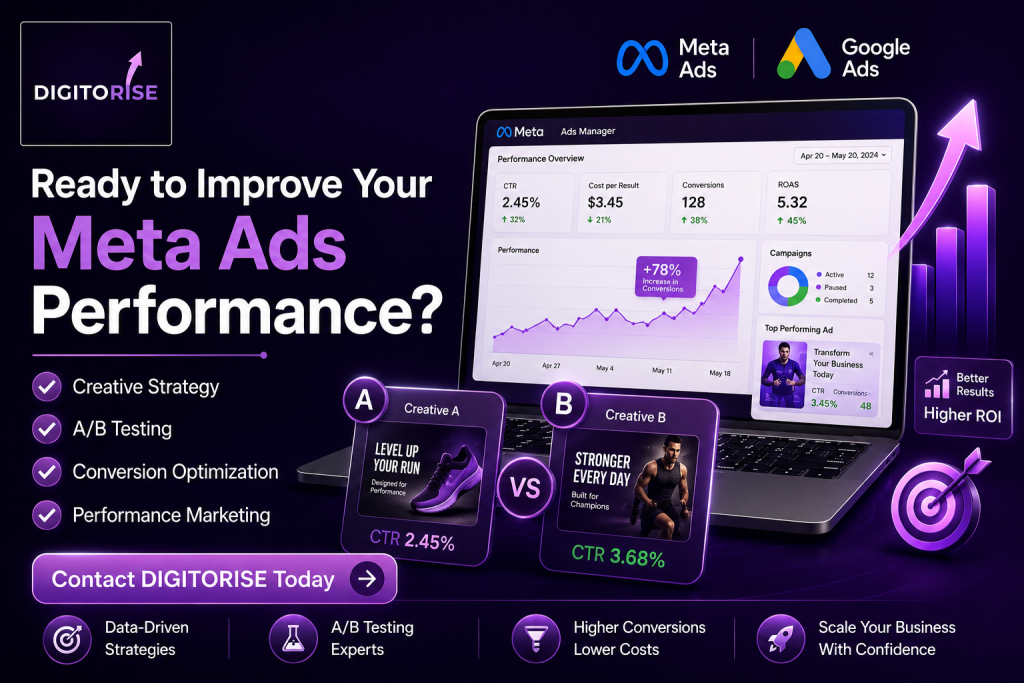
A strong meta ads creative testing framework gives you a smarter way to grow. Instead of guessing what will work, you test methodically, learn from the data, and build winning creatives that drive better performance. If you want more clicks, better engagement, and stronger conversion rates, creative testing should be a core part of your paid media strategy.